4. Matisse: An Inclusive Art Guide
Publication Design ︎ Print Production
2020
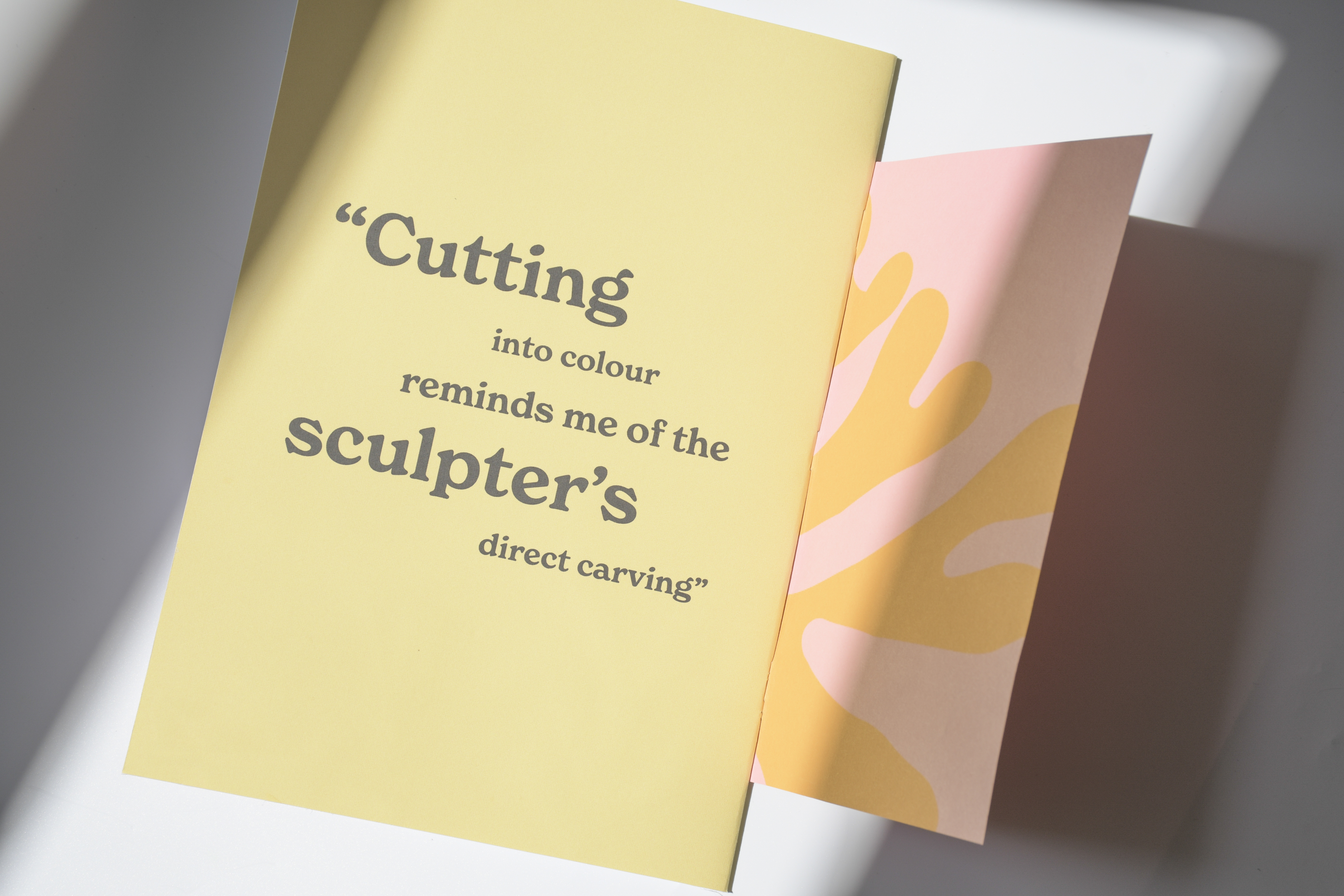
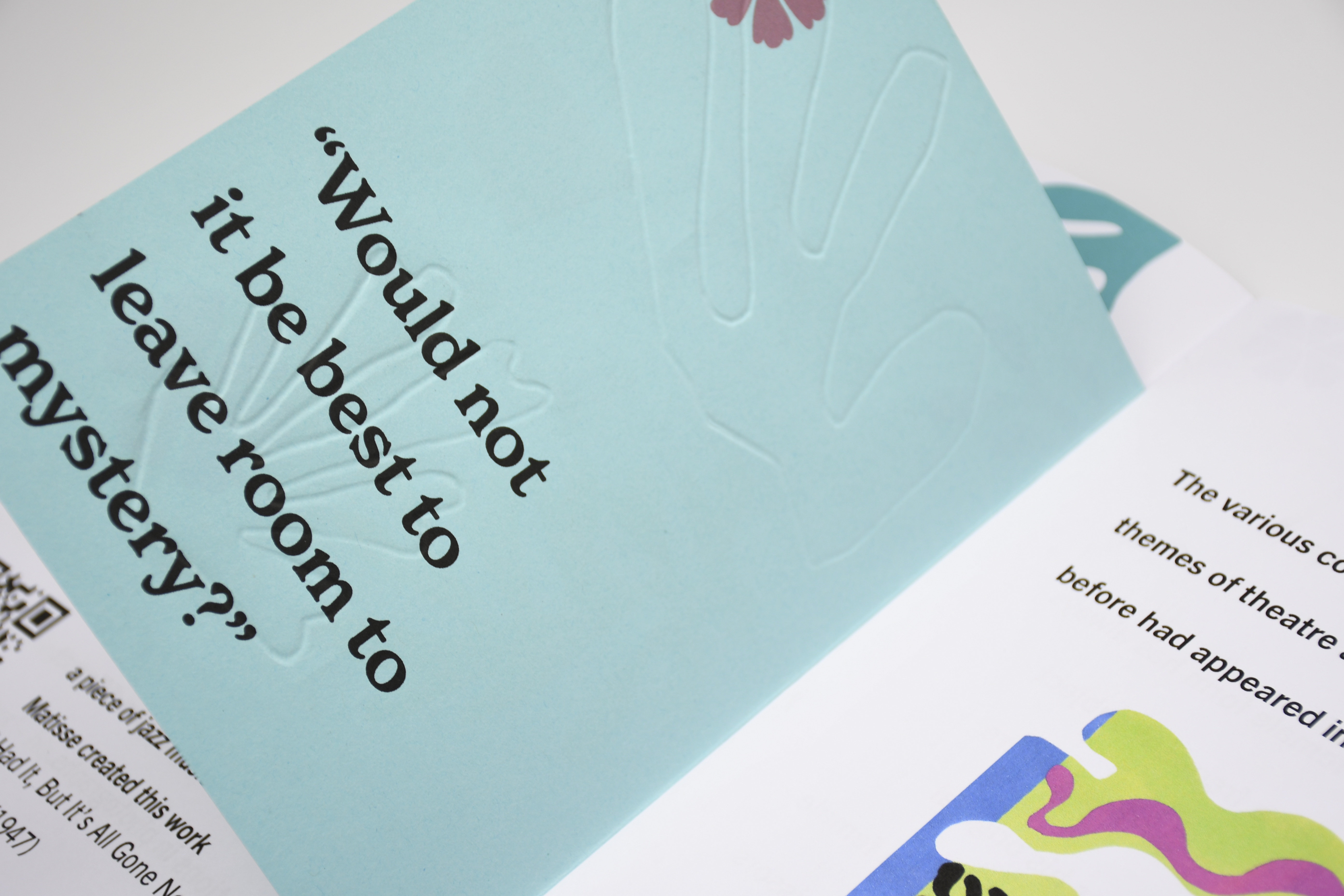
As a frequent gallery and museum visitor, I noticed that exhibition guides for partially sighted audiences often lacked personality and failed to reflect the visual language of the artwork they described. This inspired me to create Matisse: The Cut-Outs, a tactile, large-format art guide that challenges conventional printed matter through embossing, QR codes and a playful yet practical graphic language. Carefully designed with accessibility in mind, the publication offers a more engaging, sensory experience of art, encouraging partially sighted readers to explore an artist’s world alongside their fully sighted friends and family.

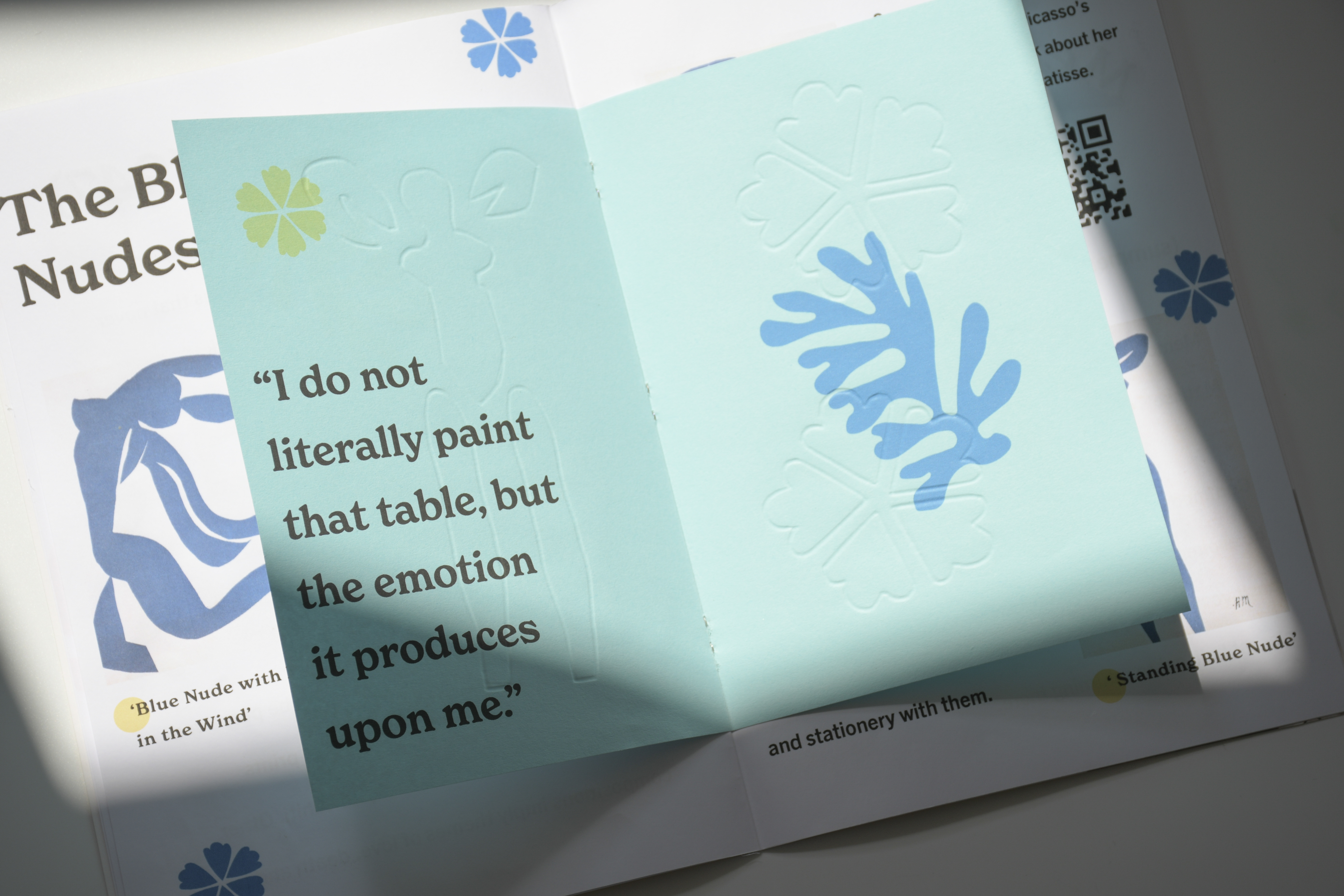

297 mm x 210 mm ︎ Saddle-Stitched ︎ Inkjet Printed ︎ Embossed Inserts
Through my collaboration with the Royal National Institute of Blind People (RNIB), I was connected with Vicky, a partially sighted woman who is registered blind. I sent her a copy of my publication to gather first-hand feedback from someone whose lived experience aligned with my intended audience, allowing me to evaluate the accessibility and effectiveness of my design decisions from a user-centred perspective.
︎︎︎Vicky shared:
“I think it’s a great concept. I like the inserted pictures and shapes throughout and enjoyed looking at the extra embossed pieces of paper. This helped me to make sense of the narrative as I do have some peripheral sight. Embedding the QR codes is a great idea as it offered up some nice audible contrasts and extra narrative which added to the experience. I knew nothing about Matisse so found the narrative very interesting!”
The layout, typeface choice, point size and alignment were all aspects that needed special consideration. Following guidelines created by the RNIB to help with the design of exhibition content for partially individuals, I discovered that all text should be aligned left, line lengths should be a maximum of 50-75 characters and leading should be increased to aid legibility.
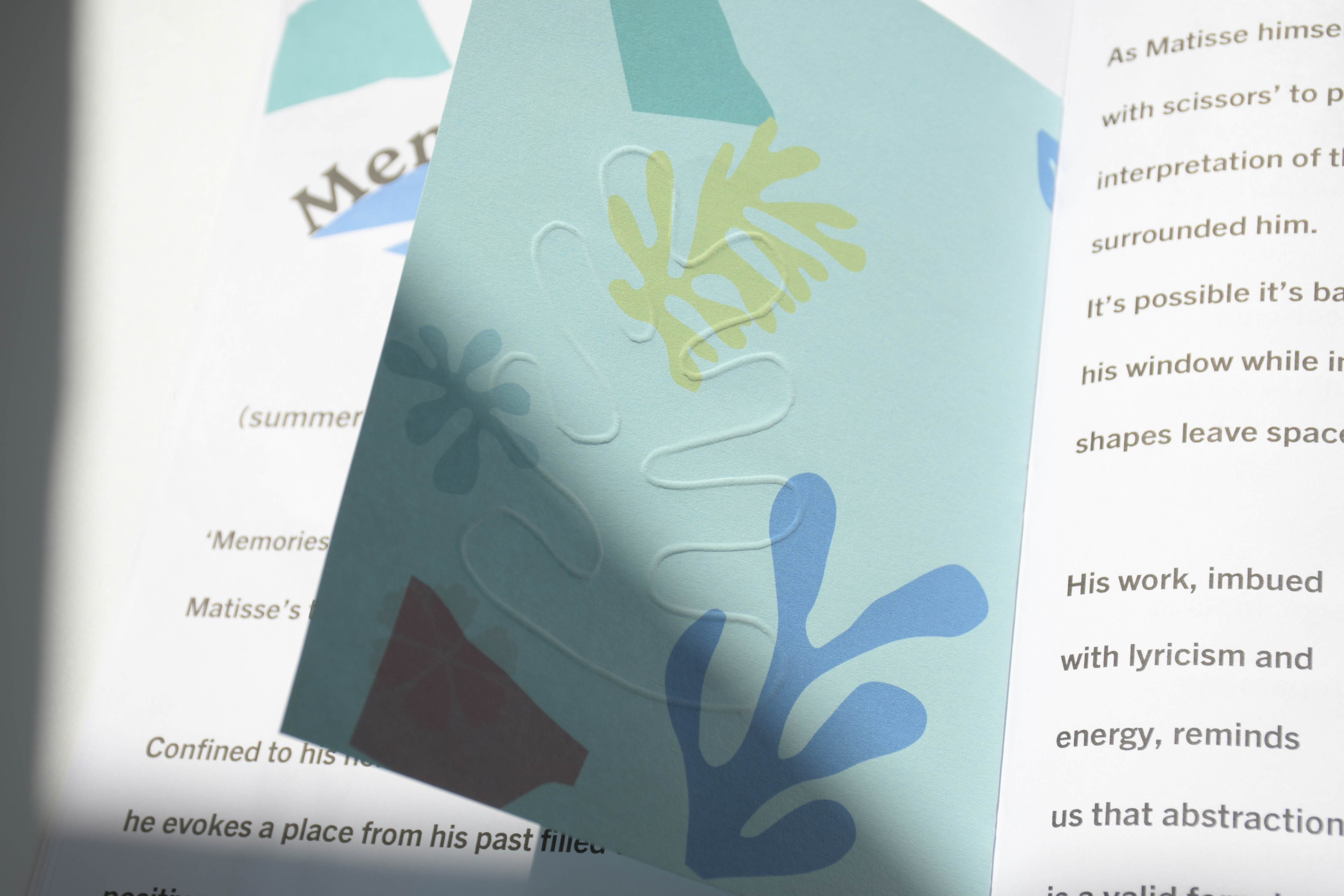
By embossing shapes from Matisse’s collages into the publication, I aimed to create a shared point of connection between sighted and partially sighted readers, allowing both to experience his work through an unfamiliar sensory perspective and opening up opportunities for meaningful conversation. To preserve the legibility and flow of the written narrative, I chose to present the embossed forms on smaller, separate inserts, allowing the tactile elements to be explored independently without interrupting the reading experience.